Smart Automation and High-Performance Materials Drive Global Market Growth
The global industrial valve industry continues steady and robust expansion in 2026, fueled by booming infrastructure investment, industrial digital transformation, and strict environmental compliance standards. According to latest industry research data, the worldwide industrial valve market is projected to grow at a 4.6% CAGR, reaching a market scale of US$107.3 billion by 2033. As core fluid control components, industrial valves including gate valves, ball valves, and automated control valves have become essential supporting equipment for oil & gas, chemical processing, municipal water treatment, power generation, and new energy projects.
In recent years, the industrial valve sector has witnessed a clear shift from traditional mechanical products to smart, low-emission, and high-durability solutions. End-users across global industries are no longer focused solely on basic on-off functions. Instead, operational stability, intelligent monitoring capabilities, fugitive emission control, and full lifecycle cost performance have become the core evaluation criteria for valve procurement. This industry upgrade is reshaping product R&D, manufacturing standards, and global supply chain layouts.
Smart Automation Becomes Core Industry Development Trend
Industry 4.0 and industrial IoT technology penetration have comprehensively promoted the popularization of automated valve systems in 2026. More than 35% of newly installed industrial valves worldwide are equipped with pneumatic or electric actuators, supporting digital signal transmission, real-time data monitoring, and remote intelligent control.
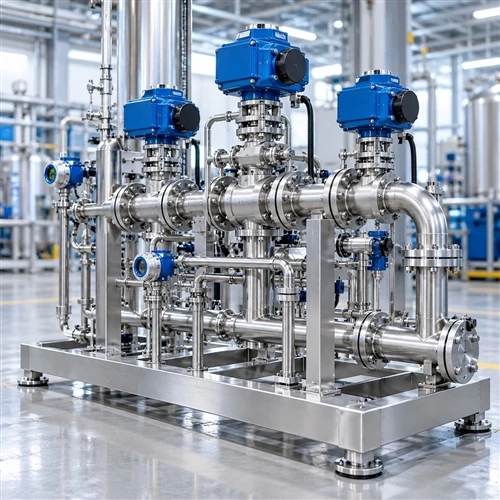
Pneumatic actuated ball valves, electric regulating gate valves, and HART protocol intelligent control valves have become mainstream products for industrial automation transformation. These smart valve solutions can monitor pipeline pressure, flow rate, and temperature in real time, realizing AI-based predictive maintenance. The technology effectively reduces unplanned equipment downtime, optimizes production operation efficiency, and greatly cuts manual maintenance costs for industrial plants.
For fluid control scenarios in chemical, pharmaceutical, food and beverage, and compressed air systems, automated three-piece stainless steel ball valves have replaced a large number of manual valves. Their fast 90-degree quarter-turn action, stable sealing performance, and remote control capability perfectly match the high-efficiency operation requirements of modern automated production lines.
High-Performance Materials Upgrade Product Adaptability
Working condition diversification drives continuous innovation in valve manufacturing materials. In 2026, high-standard ductile iron, SS304 and SS316 stainless steel, and enhanced PTFE sealing materials are widely applied in mainstream industrial valves. Compared with traditional cast iron valves, ductile iron valves feature higher strength, better pressure resistance, and stronger impact resistance, suitable for buried municipal water pipelines and large-scale water supply projects.
Stainless steel valve series excel in corrosion resistance, adapting to harsh working environments such as corrosive chemical media, saltwater, and high-temperature steam. Optimized sealing structures with upgraded R-PTFE and EPDM materials achieve bubble-tight zero leakage under extreme temperature and pressure conditions, meeting the long-term stable operation needs of severe service industrial systems.
ESG and Low-Emission Standards Raise Industry Threshold
Global environmental supervision and ESG corporate assessment systems have raised new requirements for the industrial valve industry in 2026. Fugitive emission control has evolved from optional optimization to mandatory industry standards. Low-emission valve designs effectively reduce micro-leakage of pipeline media, helping enterprises meet international environmental protection norms and carbon emission reduction targets.
Water conservancy and fire protection industries continue to promote standardized valve products compliant with AWWA standards. AWWA C515 250W resilient seated gate valves, with full bore design, low flow resistance, and excellent anti-corrosion performance, have become preferred products for municipal water supply and fire protection pipeline engineering in North America and other overseas markets.
Global Market Demand Layout and Future Opportunities
Asia-Pacific maintains the largest market share in the global industrial valve industry, benefiting from rapid industrialization, continuous infrastructure upgrading, and new energy project construction. Meanwhile, North American and European markets show steady demand growth, focusing on product standardization, intelligent upgrading, and high safety performance.
New energy tracks including hydrogen energy, LNG low-temperature storage and transportation, and wind power supporting facilities have brought new incremental demand for professional valves. Hydrogen-compatible valves and cryogenic control valves have become key research and development directions for leading valve manufacturers, opening up new growth space for the industry.
SND Valve: Empower Global Fluid Control Projects with High-Quality Products
As a professional industrial valve manufacturer focusing on global export business, SND Valve keeps pace with industry trends, focusing on R&D, production and customization of automated smart valves, municipal standard valves, and anti-corrosion industrial valves. The company's core products cover AWWA standard gate valves, pneumatic stainless steel ball valves, electric control valves, and custom industrial fluid control valves.
All SND valves undergo strict hydrostatic pressure testing and air tightness testing before delivery, with stable product quality and complete international certification documents. Supporting OEM customization, special marking processing, and diversified actuator configuration solutions, SND provides cost-effective one-stop fluid control valve solutions for municipal engineering, industrial manufacturing, water treatment, and energy projects worldwide.