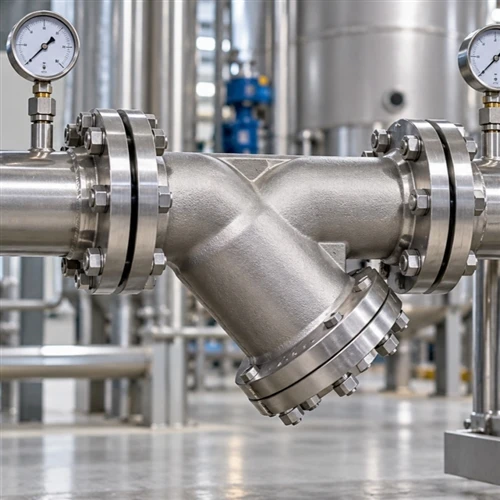
Y Strainer Selection and Maintenance A Practical Guide for Cleaner Valve Systems
Introduction
A Y strainer is a modest component with an outsized role. By capturing debris before it reaches control valves, pumps, meters and other sensitive equipment, it can prevent performance loss and unplanned maintenance. Yet many strainers are selected only by line size and connection type. A better selection considers the contaminant, allowable pressure loss, screen opening, material compatibility and cleaning method. This guide explains how to turn those operating facts into a practical Y strainer specification.
Start with the debris not the catalogue
The screen must catch the particles that threaten downstream equipment without becoming a constant restriction. Record likely debris type, size range and quantity, especially during commissioning when construction debris can be significant.
Balance filtration and pressure loss
A finer screen captures more material but creates more resistance. The acceptable pressure drop should be identified at normal flow and at the planned cleaning interval. Overspecifying fineness can cause the same operational problem the strainer was meant to prevent.
Choose serviceable construction
Consider body material, end connection, blow-off option, drain orientation and clearance to remove the screen. A strainer that cannot be cleaned safely will not protect the system for long.
Maintain with a simple routine
Use differential pressure or an operating schedule to trigger inspection. Keep a record of debris found; it can reveal upstream corrosion, construction residue or a changing process condition.