Polymer Concrete Trench Drain Channels: The Preferred Drainage Solution for Modern Municipal Projects
Release Date: September 14, 2026 Category: Municipal Drainage Knowledge
As urban infrastructure continues to upgrade, efficient surface water management has become a core requirement for roads, parking lots, plazas and residential communities. Traditional cast-in-place concrete drainage trenches have drawbacks such as long construction cycles, easy leakage, heavy weight and poor corrosion resistance. In recent years, prefabricated polymer concrete trench drain channels with ductile iron grates have gradually become the mainstream choice for engineering contractors and municipal designers.
What is Polymer Concrete Trench Drain Channel?
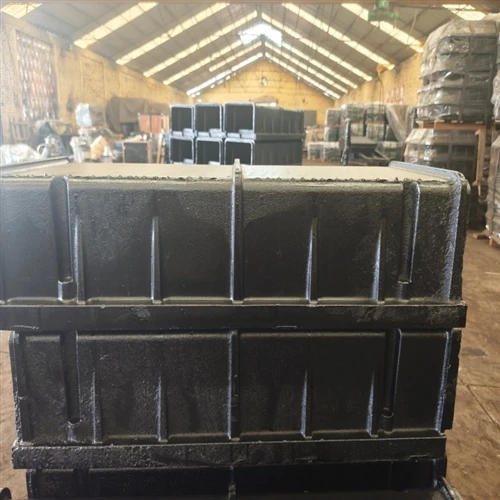
Polymer concrete trench drain is a prefabricated linear drainage system. Its channel body is made of polymer concrete, a composite material formed by high-strength aggregate and resin binder, without cement. It is matched with ductile iron slotted grates on top to form a complete set of linear drainage assembly.
Different from ordinary concrete, polymer concrete has extremely low water absorption rate, strong resistance to acid, alkali, salt and freeze-thaw erosion. The U-shaped inner cavity structure optimizes hydraulic flow, greatly improving rainwater collection and discharge efficiency. The supporting ductile iron grate has excellent load-bearing capacity to adapt to pedestrian and vehicle loads of different grades.
Core Advantages in Practical Engineering
Excellent Corrosion & Weather Resistance Polymer concrete will not expand and crack after long-term contact with rainwater, deicing salt and chemical sewage. It can maintain stable performance in coastal, cold and industrial areas, effectively extending the service life of the whole drainage system.
Fast Construction & Cost Saving Each standard channel segment is 1 meter long. Workers only need to assemble and connect the prefabricated parts on-site. It saves formwork pouring and long curing time of traditional concrete trenches, shortening the construction period and reducing on-site labor costs.
Flexible Load Options for Multiple Scenarios With matching ductile iron grates, the whole set can meet EN load grades from A15 to D400. Light load A15 for walkways and parks; heavy load D400 for highways, freight parking lots and port areas that bear heavy truck rolling.
Low Maintenance Demand The smooth inner wall reduces sediment adhesion and clogging risk. The slotted grate structure intercepts large debris, making daily cleaning and inspection simple and convenient.
Widely Used Application Fields
This linear drainage system is widely adopted in global municipal and commercial projects:
Urban municipal roads, sidewalks and green landscape zones
Commercial plazas, underground and outdoor parking lots
Industrial parks, ports, logistics yards and airport apron auxiliary drainage
Residential communities, scenic spots and stadium surface drainage
Selection Tips for Buyers
When purchasing polymer concrete trench drains, buyers should focus on three key points:
Confirm the required load class according to whether the area bears vehicle traffic;
Select the channel cross-section size based on local rainfall and water volume demand;
Verify raw material quality: high-quality polymer concrete with low porosity, and ductile iron grates with bitumen anti-corrosion coating.
Conclusion
Against the background of global infrastructure construction and urban flood control upgrades, polymer concrete trench drain systems balance performance, construction efficiency and long-term operating costs. It is a reliable, economical and durable linear drainage solution, and is increasingly favored by engineering purchasers.