Why More Projects Are Switching to Ductile Iron Manhole Covers
A few years ago, most people in municipal projects didn't really pay much attention to manhole covers.
As long as the cover stayed in place, didn't crack, and cars could drive over it safely, that was usually enough. Most contractors were more focused on steel prices, labor costs, or project schedules.
But over the past couple of years, things have started to change a bit.
I was talking with a friend who works in road construction earlier this year, and he mentioned that more cities are paying attention to manhole cover quality now, especially on heavy traffic roads. Some older covers started making loud noise after years of trucks and buses driving over them. In some cases, the frame even became loose after long-term pressure, which created a lot of maintenance work later on.
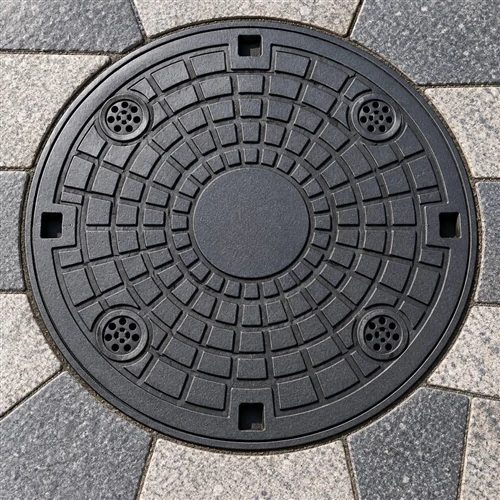
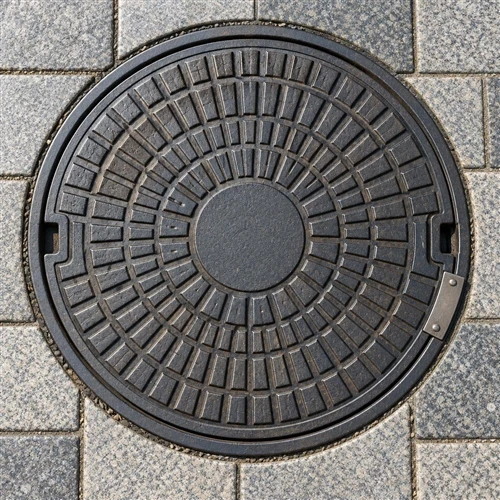
That's one reason many projects are now moving toward newer ductile iron manhole covers instead of older gray iron products.
To put it simply, they're just stronger and more reliable.
Ductile iron has better flexibility and impact resistance compared with traditional cast iron. Under constant heavy traffic, especially in ports, logistics centers, or industrial areas, it holds up much better over time and is less likely to crack suddenly.
A lot of contractors are also starting to realize that cheaper products don't always save money in the long run.
Some low-cost covers may look fine at the beginning, but once you add replacement work, road closures, and maintenance labor, the total cost can end up being much higher. That's why more infrastructure projects are choosing higher quality cast iron manhole covers from the start.
Corrosion resistance has also become a bigger topic than before.
In coastal areas or places with large temperature changes, manhole covers are constantly exposed to rainwater, moisture, and road salt. Many manufacturers now use asphalt paint or epoxy coating to slow down rust problems and improve service life.
Another thing people outside the industry usually don't notice is the fitting accuracy between the cover and the frame.
If the fitting isn't precise enough, vehicles passing over it can create movement and vibration. After some time, that turns into noise problems or even instability. Because of this, some factories have started using more precise machining equipment to improve fitting quality.
For highways, ports, warehouses, and industrial zones, most engineers now prefer heavy duty manhole covers that meet EN124 standards like D400 or E600 classes.
Anti-theft design has also become more important in recent years.
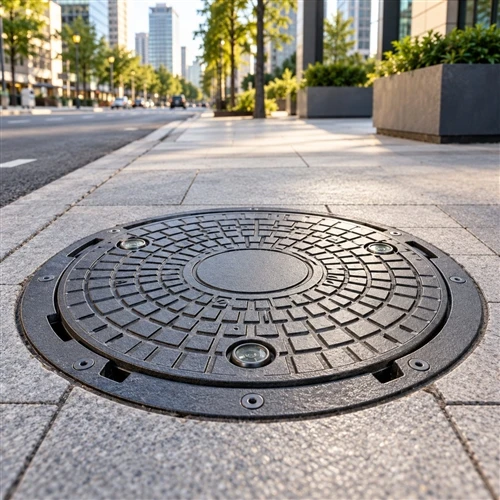
In some cities, stolen sewer manhole covers used to be a serious problem. Now many newer products come with locking systems or hinge designs to improve safety and reduce maintenance risks.
At the end of the day, manhole covers are probably not the most noticeable part of a city's infrastructure. But when problems happen, they can create a surprising amount of maintenance trouble. That's why more contractors and municipalities are taking product quality more seriously than before.