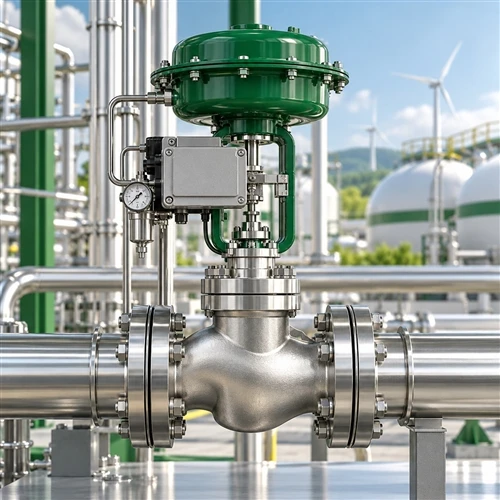
A ball valve is a type of valve that controls fluid flow by rotating a ball. Due to its simple structure, good sealing performance, and ease of operation, it is widely used in many industrial sectors. The following are the main application areas of ball valves:
Oil and Gas Industry: Ball valves play a crucial role in oil extraction, transportation, and natural gas distribution systems. They can withstand high pressures (typically up to 6000 psi) and high temperatures (-200°C to 500°C), making them suitable for controlling crude oil, natural gas, and liquefied petroleum gas. For example, in pipeline systems, ball valves are used to quickly shut off or regulate fluid flow, ensuring safe transport.
Chemical Industry: Chemical production involves corrosive, flammable, and explosive media. The material of the ball valve (such as stainless steel, Hastelloy, or ceramic) can be selected according to the characteristics of the media to ensure corrosion resistance and sealing performance. For example, PTFE-lined ball valves are a common choice in pipelines transporting strong acids such as sulfuric acid and hydrochloric acid.
Food and Beverage Industry: Ball valves must meet hygiene standards (such as FDA, 3-A) and typically use 316 stainless steel or PTFE sealing materials to ensure non-toxicity and easy cleaning. They are used to control the transport of fluids such as milk, juice, and beer to prevent contamination.
Pharmaceutical Industry: In aseptic production, sanitary ball valves are used in pipeline systems for purified water and water for injection, requiring a zero-dead-angle design to prevent microbial growth.
Power Industry: Ball valves are used in boiler feedwater and cooling systems, requiring resistance to high temperatures and pressures; common materials are carbon steel or alloy steel.
Water Treatment Industry: In municipal water supply and sewage treatment, ball valves are used to cut off or regulate water flow; large-diameter ball valves (DN300 and above) are commonly found in main pipeline networks.
Paper Industry: Ball valves are used to control the flow of pulp and chemical agents, requiring resistance to wear and corrosion; they are typically made of wear-resistant alloys or lined with rubber.
Precautions:
When selecting ball valves, the characteristics of the medium (corrosiveness, viscosity), pressure rating, and temperature range must be considered.
Under high pressure differential conditions, hard-seal ball valves must be selected to avoid cavitation damage.
In low-temperature environments (such as LNG), specially designed ball valves with cryogenic treatment are required.
Our SND offer a variety of valve products, all made with high-quality materials, resistant to high pressure and corrosion, and suitable for various industrial applications.