Valve Modernization Is Moving Beyond Automation: The Rise of Operationally Visible Flow Control
For many years, valve upgrades were described in a simple way: replace a manual valve with an automated one. That remains useful, but it is no longer the whole story. A valve can be motorized and still create uncertainty if the operator cannot confirm its real position, identify emerging service needs or restore it quickly after a fault.
The more useful question is this: does the valve help the operating team make confident decisions? That is the principle behind operationally visible flow control.
From "open or closed" to useful operating information
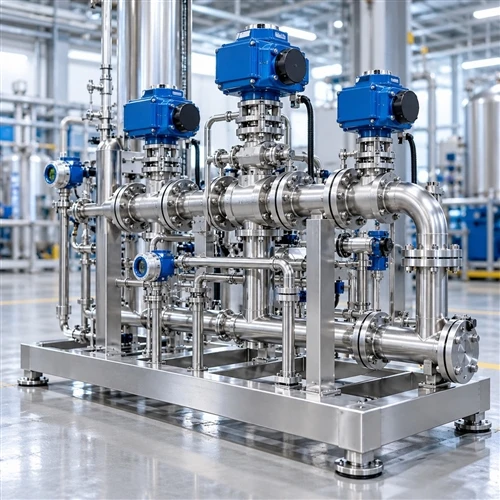
An actuator can deliver movement; a well-designed valve assembly delivers clarity. In a practical installation, that may include local mechanical indication, remote open/close feedback, torque or alarm reporting, handwheel override and a mounting arrangement that gives technicians safe access.
Not every system needs a complex digital platform. A small booster station may only need dependable end-position feedback. A large treatment plant may benefit from condition alarms, cycle history and integration with a supervisory control system. The correct level of visibility should follow the consequence of failure, the number of operating cycles and the difficulty of accessing the valve.
This approach avoids a common mistake: paying for sophisticated controls where a robust, easy-to-service valve would create more value.
Why maintainability has become a procurement issue
Valve specifications are often written around nominal diameter, pressure rating, body material and face-to-face dimension. These items matter, but they do not tell the full operational story. A specification should also ask how the valve will be inspected, adjusted and repaired after installation.
For example, buyers can examine:
Whether the stem, seat and actuator connection are accessible without removing extensive pipework.
Whether common service parts can be identified and supplied clearly.
Whether the valve can be manually operated during a power or control interruption.
Whether the design reduces the risk of external corrosion, trapped debris or hard-to-reach fasteners.
Whether installation orientation is documented for the actual medium and site layout.
These details may look modest on a drawing, but they shape shutdown time. In an industrial system, a valve that is easy to inspect can be more valuable than a cheaper valve that requires a lengthy intervention.
Butterfly valves: a strong platform for modernization
Butterfly valves are frequently selected for large water lines, HVAC systems and many industrial utility duties because they offer compact dimensions, relatively low weight and efficient quarter-turn operation. Their suitability for automation also makes them a natural modernization candidate.
However, "butterfly valve" is not a complete specification. The disc material, seat material, shaft arrangement, pressure-temperature conditions and fluid characteristics all influence performance. Clean water, chlorinated water, seawater, slurry and mildly corrosive media can require very different combinations.
When modernizing an existing line, it is especially important to verify the real operating condition instead of relying only on the original drawing. Check line pressure, temperature range, differential pressure at operation, medium chemistry, cycling frequency and available mounting space. A valve assembly chosen from actual conditions is less likely to face premature seat wear, insufficient actuator torque or unstable control.
Design for recovery, not only normal operation
The best valve packages are designed for the day something goes wrong. Consider a power interruption, a flooded valve chamber, a failed signal cable or an urgent maintenance request. Can the operator understand the valve status? Is there a safe manual override? Is the actuator protected to the appropriate environment? Are the spare parts and wiring information available?
This is why resilient valve modernization usually combines four layers:
A valve body and sealing system suited to the medium.
An actuator sized for real breakaway and running torque, with a sensible safety margin.
Clear local and remote indication.
A service plan covering inspection points, spares and emergency operation.
The strongest projects make these layers work together instead of treating them as separate purchasing items.
A smarter way to compare quotations
When comparing valve suppliers, request a line-by-line response rather than a generic catalogue page. Ask for the valve type, material specification, pressure range, seat and disc materials, actuator model, operating torque, protection level, control signal, feedback options, testing scope and recommended spares.
Then compare the answers against the actual duty. A lower initial price may be appropriate for a simple, accessible isolation point. But for a buried chamber, remote treatment site or critical process line, lifecycle risk should carry more weight. The expense of one unplanned visit or process interruption can easily exceed the difference between two quotations.
The next step: visible, serviceable and fit for duty
The future of industrial valve selection is not about adding technology for its own sake. It is about choosing a valve assembly that operators can trust, understand and maintain. Automation is one tool in that objective; practical visibility and recoverability are equally important.
For project teams, the most productive starting point is a concise duty sheet. Define the medium, pressure, temperature, line size, control requirement, installation environment and maintenance expectation. With this information, a valve manufacturer can recommend an assembly that serves the system for years-not merely one that fits between two flanges.