Smart Manhole Covers Move from Passive Street Hardware to Active Urban Infrastructure
A Quiet Shift at Street Level
For decades, the manhole cover has been treated as a mature, almost invisible product: a round or rectangular closure placed over a chamber so operators can inspect sewers, drainage lines, cable vaults, valves, meters, and other buried assets. That view is changing. As cities build denser transport corridors, expand underground utility networks, and face greater pressure to prevent flooding and protect public spaces, the smart manhole cover is emerging as a highly practical piece of urban infrastructure technology.
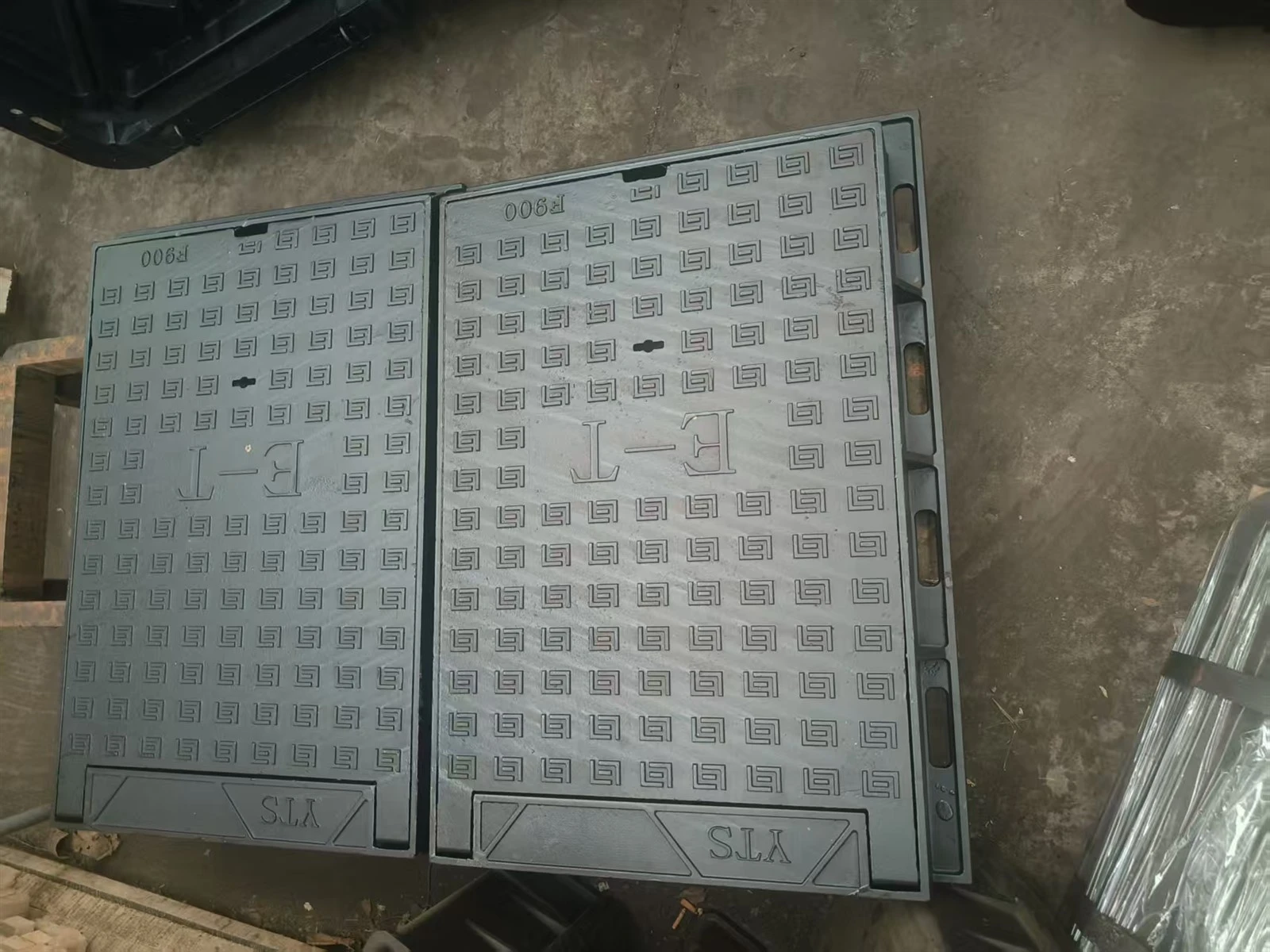
The change is not merely cosmetic. A modern municipal manhole cover can now be specified as part of an integrated access-and-monitoring system. It may combine a ductile iron cover and frame with anti-displacement geometry, load-rating markings, a gasketed seating surface, locking or anti-theft provisions, QR or RFID asset identification, and optional sensors for opening, tilt, water level, temperature, or gas-related conditions. Linked to a municipal platform or a utility maintenance system, these features help turn a previously passive component into a source of actionable field information.
The new value proposition is straightforward: the better a city understands the status of access points above its underground assets, the faster it can identify a hazard, dispatch an inspection team, protect road users, and document the condition of its network.
Why Manhole Cover Safety Is Receiving More Attention
An unsecured, damaged, rocking, or missing cover is not a minor maintenance issue. It can create a direct fall hazard for pedestrians and cyclists, a tire-impact hazard for vehicles, and a pathway for debris or stormwater to enter underground systems. In locations with high pedestrian density or mixed traffic, one defective chamber cover can also create reputational and liability exposure for an asset owner.
At the same time, the operating environment has become more demanding. Urban roads carry heavier delivery vehicles, construction traffic, buses, and increasingly frequent stop-start loads. Surface settlement, poor frame bedding, corrosion, repeated impact, and thermal movement can all compromise seating stability over time. A cover chosen only on nominal diameter, without considering its installed system performance, may not provide adequate long-term service.
That is why procurement teams are moving toward a lifecycle perspective. Instead of comparing only the purchase price of a manhole cover, they are asking questions such as: What wheel loads will the cover experience? Is the chamber located in a carriageway, shoulder, pedestrian zone, port, or airport apron? How is the frame supported? Is the cover resistant to rocking? Can unauthorized opening be detected? How quickly can replacement parts be identified and supplied?
Ductile Iron Remains the Core Material for Heavy-Duty Applications
For high-load municipal and utility applications, ductile iron manhole covers remain a leading engineering solution. Ductile iron, also called spheroidal graphite iron or nodular cast iron, has graphite in spheroidal rather than flake form. This microstructure improves ductility, toughness, and resistance to crack propagation compared with conventional gray cast iron.
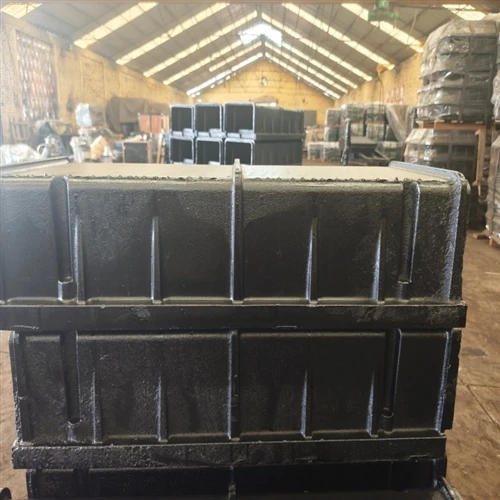
In a well-designed cover-and-frame assembly, material selection is only one element of the performance equation. The structural rib pattern, cover thickness, bearing surfaces, frame depth, hinge or lifting arrangement, locking structure, and installation method all influence load transfer and fatigue durability. A high-quality heavy-duty manhole cover must distribute traffic loads through the frame and surrounding support structure without concentrating stresses at vulnerable points.
Standards such as EN 124 establish load classes for gully tops and manhole tops used in pedestrian and vehicular areas. The correct class should be selected according to the actual installation zone and the realistic risk of vehicle access-not simply the intended use described at design stage. A cover installed near a curb, in a logistics yard, or beside a loading bay may be exposed to loads very different from those expected in a pedestrian-only area.
The Rise of Intelligent Manhole Cover Monitoring
The most visible innovation is the manhole cover monitoring system. Sensor modules fitted beneath or inside the cover can detect whether the cover is closed, open, tilted, displaced, or subjected to unusual movement. Depending on the design and network architecture, the system may use low-power wide-area communication technologies to relay alerts to a cloud dashboard or operations center.
This creates several practical operational benefits. First, an alert can support a quicker response when a cover is opened unexpectedly or removed. Second, utilities can build a digital inventory of underground access points, including location, type, load class, inspection history, and status. Third, recurring problem locations can be identified through data rather than anecdotal reports. A cover that repeatedly shifts under traffic may indicate not only a cover issue but also degraded chamber support, surface settlement, or a mismatch between the product class and real operating load.
Monitoring does not eliminate the need for inspection. It makes inspection more targeted. Instead of relying entirely on fixed patrol routes, maintenance teams can prioritize assets that have generated an alarm, reached a service interval, or shown patterns associated with risk.
Anti-Theft Design Is Becoming a Standard Requirement
Metal theft and unauthorized access remain concerns in many markets. An anti-theft manhole cover can include concealed or proprietary locking arrangements, restrained covers, non-standard lifting interfaces, tamper-resistant fasteners, or a design that makes removal without the correct tool more difficult. The best solution depends on the asset type, emergency-access requirements, safety procedures, and local operating model.
For utility operators, the goal is not to make authorized access inconvenient. It is to create controlled access: field personnel should be able to open the cover safely with the correct procedure and tools, while casual tampering or opportunistic removal becomes significantly harder. When a lock is specified, corrosion resistance, drainage, operability after years in service, and rescue or emergency protocols all deserve attention.
Installation Quality Determines Real-World Performance
Even the most advanced smart manhole cover cannot compensate for poor installation. The frame must be fully supported, levelled correctly, and integrated with the pavement or surrounding surface to prevent voids and differential settlement. The bearing surfaces must be clean, properly seated, and free from construction debris. Where specified, bedding materials and reinstatement compounds should meet the relevant performance requirements.
Rocking is a common but preventable problem. It can generate noise, accelerate wear, reduce user confidence, and transmit impact loads into the frame and chamber. Design features such as machined seating surfaces, multi-point support, elastomeric inserts, and stable frame geometry can help, but correct installation and periodic condition assessment remain essential.
What Procurement Teams Should Specify
The next generation of municipal manhole cover specifications is more detailed than a simple diameter-and-load-class request. A robust specification should define the application zone, clear opening, frame dimensions, load class, material grade, corrosion-protection approach, surface pattern or slip-resistance requirement, locking and lifting provisions, markings, seating design, and relevant testing requirements. For smart systems, it should also identify sensor functions, communications protocol, battery life assumptions, ingress protection, cybersecurity responsibilities, data ownership, alert thresholds, and integration requirements.
The most effective procurement decisions connect these technical details to the intended operating environment. A municipal stormwater chamber in a coastal road, a telecom vault in a busy sidewalk, and a valve chamber in an industrial yard may all require different combinations of load performance, sealing, access control, and digital monitoring.
A More Resilient Underground Network Begins at the Surface
Cities often discuss resilience in terms of major projects: flood tunnels, smart grids, transit systems, and digital control centers. Yet resilience is also built through thousands of dependable components that protect access to the infrastructure below. The smart manhole cover illustrates that point clearly. By combining durable ductile iron engineering, correct load classification, anti-theft measures, stable installation, and optional real-time monitoring, asset owners can improve public safety and gain greater control over their underground networks.
As municipal digitalization becomes more practical, the question is no longer whether a manhole cover can be connected. The more valuable question is how its information can be used to improve maintenance decisions, protect people, and extend the service life of essential urban assets.