Valve Material Compatibility for Industrial Fluid Service
Valve material compatibility is not a single-body-material decision. The process fluid reaches body metal, trim, seat, stem packing, gaskets and often fasteners, while temperature and pressure can change how each material performs. A valve that looks suitable on a general chemical list may fail when concentration, cleaning chemicals, oxygen content or temperature excursions are ignored. The practical goal is to define the full service envelope and select a compatible assembly, not merely a compatible valve shell. This guide outlines the checks that help purchasing and engineering teams turn a vague material request into a reliable valve specification.
Define the actual medium
Name the fluid, concentration, contaminants, pH range, cleaning agents and possible shutdown conditions. If the fluid changes by batch or season, provide the full range. Trace contaminants and residual moisture can matter because they may create corrosion or swelling behavior not visible in a simplified medium description.
Separate body trim and sealing choices
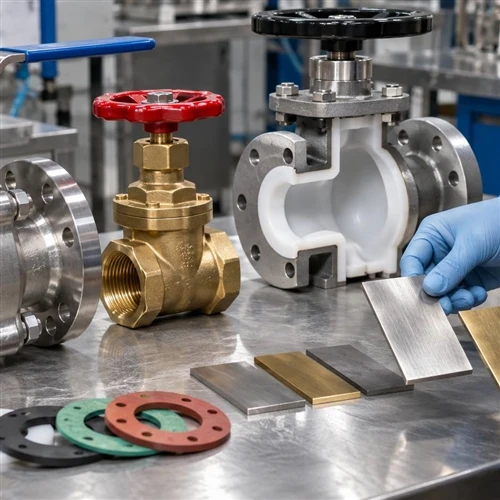
The body may tolerate a service while soft seats, packing or gaskets are the limiting components. Specify wetted trim, elastomer or polymer seat material, packing and gasket grade separately. For lined valves, ask how the liner is anchored and what temperatures or vacuum conditions can affect it.
Include temperature pressure and cycling
Compatibility charts are usually condition-dependent. Confirm the operating and design temperature, pressure, pressure cycling and thermal cycling. A material that is stable at room temperature can lose mechanical strength, soften or become more permeable at higher temperature. Repeated cycling can also stress joints and sealing interfaces.
Request traceable confirmation
A supplier should confirm the proposed materials against the stated service and identify any assumptions. For critical applications, consider sample exposure, third-party material certificates or a documented engineering review. Clear material records support spare-parts consistency and reduce the risk of a visually similar but incompatible replacement entering service.