How to Choose Industrial Valves for Water and Pipeline Projects
An industrial valve must do more than fit a pipe. It needs to perform the intended job, handle the fluid and operating conditions, and connect correctly to the rest of the system. The right selection starts with the valve function and the operating data, then moves to materials, dimensions and documentation.
This guide helps buyers compare common valve types and prepare a clearer inquiry for water and pipeline projects.
Start with the valve's function
Identify what the valve has to do in normal operation and during shutdown. Four common types serve different purposes:
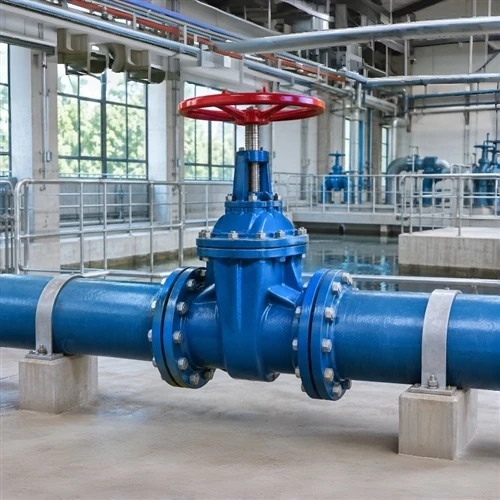
Gate valves are commonly used to isolate a pipeline. Many designs are intended for fully open or fully closed service rather than continuous throttling.
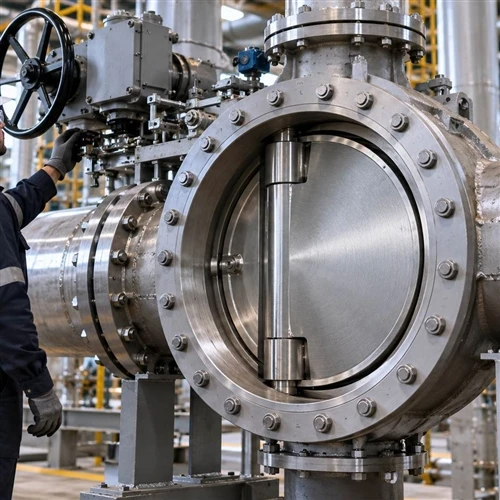
Butterfly valves use a rotating disc and can provide isolation. Some designs are also selected for flow control when their characteristics suit the duty.
Ball valves use a rotating ball and are often chosen for quarter-turn shutoff. Port configuration and seat materials depend on the design.
Check valves allow flow in the intended direction and help limit reverse flow. The opening and closing behaviour must suit the flow conditions and installation.
For a duty requiring controlled flow, discuss the required control range and pressure drop with the supplier. Valve type alone is not enough to determine whether a particular model is suitable.
Confirm the medium and operating conditions
State the fluid, its concentration where relevant, and whether it contains solids. Include the normal and maximum operating pressure, design pressure, temperature range, flow rate and maximum differential pressure where applicable. For pump systems, share information about start-up, shutdown and possible pressure surges.
Water, wastewater, steam and chemicals place different demands on the body, disc or ball, stem, seat and seals. For drinking-water applications, specify the destination market and the required approvals or test documents for the relevant materials and products.
AI-generated illustration
Check size, pressure rating and connections
Give the nominal size as DN or NPS and identify the required pressure designation and standard. A nominal size is a reference, not a measured flange diameter. Pressure capability also depends on the valve design, material and temperature, so the designation must be checked against the applicable pressure-temperature rating.
For a flanged valve, specify the flange standard and dimensions. Also check the face-to-face length and available installation space. For a replacement, provide the existing valve drawing and mounting details rather than relying on size alone.
Select materials and operation together
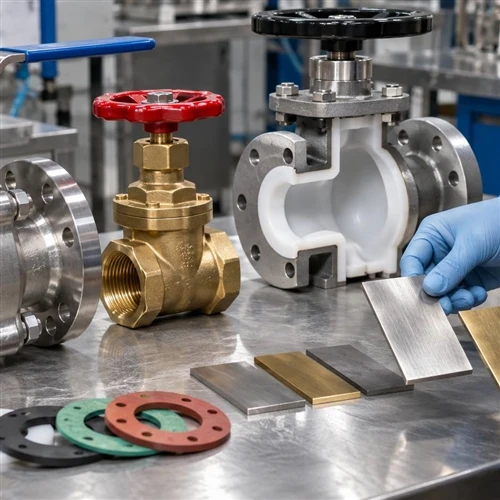
The body, closure element, stem and seat can be made from different materials. Their compatibility depends on the medium, temperature and service conditions. Ask the supplier to identify each material in the proposed configuration instead of describing the entire valve with a single material name.
Manual handwheels or gear operators suit some installations; electric and pneumatic actuators are options where remote or frequent operation is needed. For an actuator, confirm the power supply or air supply, control signals, operating speed, required torque, mounting arrangement and fail position where applicable. State whether the actuator and its accessories are part of the supply.
Ask for the right documents
List the design, connection and test standards required by the project, along with the required leakage acceptance criteria. If material certificates, pressure test reports, coating records or third-party inspection are needed, specify them before quotation. Check the scope and validity of any approval against the exact valve and materials offered.
Frequently asked questions
Can a gate valve be used to regulate flow?
Many gate valves are selected for isolation. For continuous throttling, ask the valve manufacturer to confirm suitability or propose a valve designed for the control duty.
Does the same DN guarantee that a replacement will fit?
No. Check the flange standard, face-to-face dimension, pressure rating and actuator clearance as well as the nominal size.
What information is essential for a valve quotation?
Provide the valve type and function, medium, pressure and temperature, size, connections, materials, operation, quantity and required test documents. A drawing or data sheet is especially useful for replacement projects.
Request an industrial valve quotation
SND lists gate, butterfly, ball and check valves. Send our team your operating conditions and connection requirements, and we can review the specification for an offer.