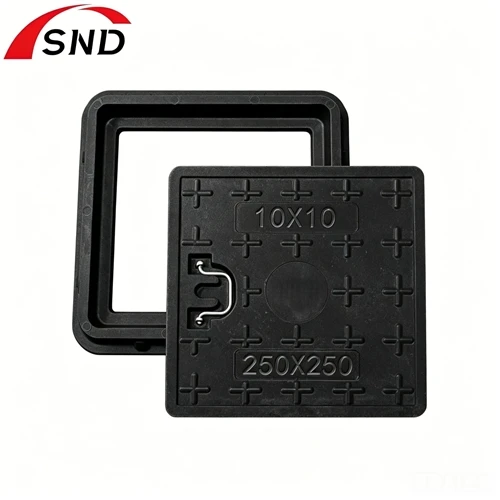
Material Selection Determines Manhole Cover Lifespan
Manhole covers are like the buttons of a city; choosing the wrong material can lead to serious consequences. Among common materials, ductile iron has excellent compressive strength and is suitable for areas with heavy traffic; composite materials are lightweight and suitable for sidewalks; and steel fiber reinforced concrete balances economy and load-bearing requirements. The key is to consider the usage scenario: areas with heavy vehicle traffic require materials that can withstand more than 30 tons, while residential areas only need 15-ton capacity covers.
Anti-Fall Design Has Its Tricks
Preventing falls isn't simply a matter of adding a cover:
- Double-layer structure: An upper load-bearing layer + a lower anti-fall net, preventing the formation of a hole even if the cover is damaged.
- Locking device: Prevents theft and displacement, reducing the risk of human-induced damage.
- Optimized drainage: Special hole design ensures smooth drainage and prevents water accumulation and corrosion.
- Warning signs: Luminous strips or raised patterns remind pedestrians to be careful.
Routine Maintenance is Often Overlooked
90% of manhole cover accidents stem from neglected maintenance:
- Check the cover for looseness or displacement monthly.
- Clean drainage holes before and after the rainy season to prevent blockages.
- Replace covers immediately upon discovering cracks; small cracks can expand rapidly.
- If the surrounding road surface settles by more than 2 centimeters, a comprehensive inspection is needed.
- De-icing salt in winter accelerates corrosion and requires special protection.