


As a recessed cover supplier, I get asked a lot of questions from contractors, municipal engineers, and facility managers who are sizing up their options for underground access points. One question that keeps coming back is, “What is the flexibility of a recessed cover?” It’s not the first thing people think about when they’re out bidding a road repair project or planning a building’s utility layout, but flexibility in this context isn’t about bending—though that’s a part of it. It’s about how well a recessed cover adapts to real-world conditions, handles loads it wasn’t designed for, and holds up over decades of use. Let’s break this down like I do when I’m sitting across from a city works foreman or walking a jobsite with a plumbing contractor.
First, let’s get one thing straight: when we talk about a recessed cover’s flexibility as a supplier, we’re not talking about it being flimsy. If a cover is too bendy, it’s going to crack under traffic loads or shift out of alignment, which creates a tripping hazard or damages the underlying frame. The flexibility we care about is its ability to distribute force across its entire structure without failing, adjust to minor shifts in the ground (like settling soil or temperature changes), and still function as intended year after year. That balance is what separates a cheap, off-the-shelf cover from one that’s built to last.
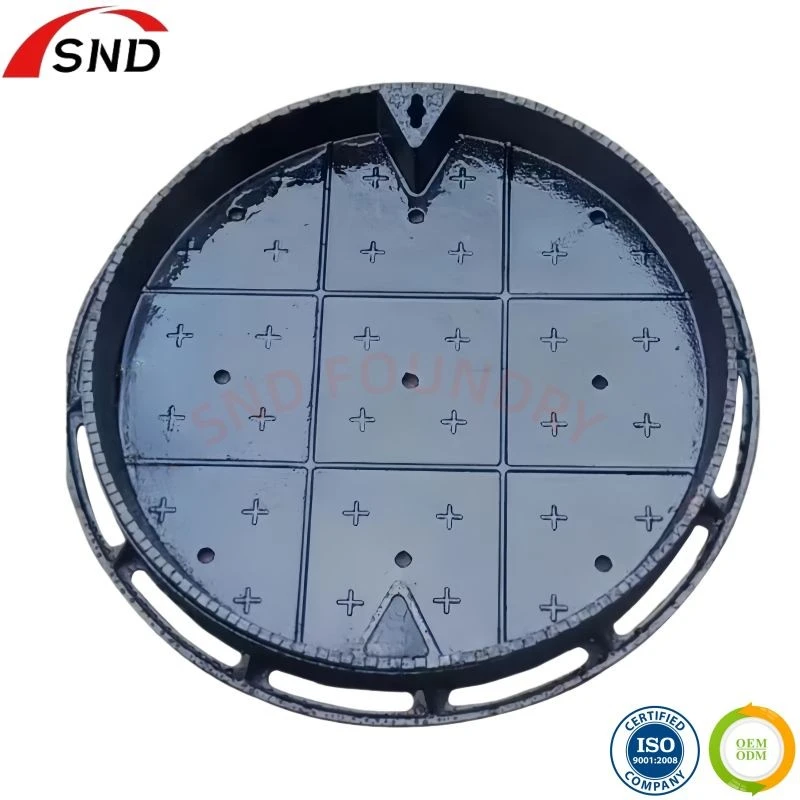
Let’s start with material, because that’s the biggest driver of this flexibility. A lot of suppliers use different metals, but the best in the business (including us) have found that ductile iron hits that sweet spot perfectly. If you haven’t looked at our ductile iron recessed covers and frames yet, here’s where that material flexibility really shines: ductile iron is way more resilient than gray iron, which most people used 20 or 30 years ago. Gray iron is brittle—if you hit it with a heavy load, it cracks. Ductile iron has graphite nodules that act like tiny shock absorbers, so it bends a little instead of snapping. That’s the core of a recessed cover’s flexibility. When a 40-ton semi drives over a driveway cover, or a snow plow blade catches the edge of a utility cover, the ductile iron distributes that force evenly across the frame, rather than concentrating it at one point and breaking.
I learned this early on in my career when we had a client who was putting covers in a neighborhood with soil that had a lot of clay. Clay soil shifts a lot—when it rains, it swells; when it dries out, it shrinks. Most suppliers told them to use concrete covers, but concrete doesn’t have any flexibility at all. It would crack within a year as the ground moved. We recommended our ductile iron recessed covers, and 10 years later, they’re still holding strong. That’s flexibility in action: the cover’s structure can move with the soil a tiny bit without losing its seal or its ability to carry load. Concrete can’t do that. It’s rigid, and when the ground shifts, the cover breaks.
Another part of a recessed cover’s flexibility is load adaptability. Not every cover is going to see the same loads. A residential sidewalk cover might only need to handle a few hundred pounds at most—pedestrians, bikes, maybe a light truck occasionally. A road cover, though, needs to handle 10 times that, from regular passenger cars up to semi-trucks. As a supplier, we engineer our recessed covers with different flexibility ratings depending on where they’ll be installed. A Class C residential cover has a little more give to absorb minor foot traffic and light loads without feeling stiff or squeaky, while a Class E heavy-duty road cover has higher strength with just enough flexibility to handle repeated heavy loads without fatigue. The key here is matching that flexibility to the application. You wouldn’t use a sidewalk cover on a highway, and vice versa. That’s what we help our clients figure out when they reach out to us—we don’t just sell them a cover, we explain what flexibility they need for their specific job.
Wait, let’s talk about fatigue, too, because that’s a big part of long-term flexibility. A cover might pass a load test once, but what happens after 10,000 passes from trucks? If it’s too rigid, it develops micro-cracks over time, and those cracks grow until the cover fails. The ductile iron in our covers has fatigue resistance built into its flexibility. It can flex slightly thousands of times without developing those cracks. I had a municipal client call me a couple years ago because they had a set of covers in a downtown district that was seeing heavy delivery traffic—trucks pulling in and out of loading docks all day, every day. The previous covers they were using would crack after about two years. We installed our ductile iron recessed covers, and five years later, they haven’t had a single failure. That’s flexibility paying off over time. The cover is taking that repeated load, flexing just enough to distribute it, but not so much that it wears out.
There’s also the flexibility of installation, which a lot of people don’t think about. No two jobsites are exactly alike. Sometimes the frame is going to be a little off-level, or the excavation for the cover has slightly uneven edges. Our recessed covers are designed with a little tolerance for that. The frame can adjust to minor misalignments without forcing the cover to sit crookedly, which would cause it to wear out faster. We also offer different locking mechanisms that give flexibility in how the cover is secured—some clients need a quick-release for emergency access, others want a secure lock to prevent theft of utility parts. That kind of flexibility is part of the package too, right? A cover that’s easy to install and adjust on-site saves contractors time and money, which is a huge deal on any job.
I’ve run into people who think flexibility is a negative—they say “if it bends, it’s not strong.” But that’s a misunderstanding. Strength and flexibility aren’t opposites; they work together. A rigid, brittle cover might look strong, but when it’s under load, all the stress is in one small area, and it breaks. A flexible cover (the good kind) distributes that stress across the entire structure, so no single point gets overloaded. Think of it like a steel beam vs. a glass beam. A glass beam is stronger at first, but if you apply a little extra force, it shatters. A steel beam bends a little before it breaks, so you know it’s under stress, and it can handle more total force. That’s exactly how a ductile iron recessed cover works. It has the strength to carry heavy loads, but the flexibility to absorb those loads without failing.
Let me also address common misconceptions. A lot of suppliers will advertise a “heavy-duty” cover as if it’s the right choice for every job, but that’s not true. A heavy-duty cover is more rigid, so it’s overkill for residential applications. It’s also more expensive, which is a waste of money. That’s where working with a supplier who understands flexibility comes in. We’ll ask you questions about where the cover is going to be installed, what kind of traffic it will see, what soil conditions are like, and then recommend a cover with the right balance of flexibility for that specific use. Last year, we had a client who was installing covers in a parking garage—they thought they needed a super rigid, industrial-grade cover. We explained that parking garage covers see mostly passenger cars, so a medium-flexibility ductile iron cover would work, which saved them 20% on the project cost. That’s the value of understanding how flexibility applies to your job.
Another point: temperature changes. Metal expands and contracts as the temperature goes up and down. In places where it gets really hot in the summer and really cold in the winter, that movement can cause rigid covers to warp or crack. Our ductile iron recessed covers have just enough flexibility to expand and contract with temperature changes without warping or binding. I’ve seen covers in Arizona that were installed 15 years ago—they still fit perfectly, no gaps, no warping. A rigid concrete cover in the same area would have cracked or shifted within a few years because it couldn’t handle that temperature movement. That’s another example of flexibility being critical for long-term performance in extreme environments.
I know from talking to clients that cost is always a factor, but choosing a cover based on its flexibility is actually a smart long-term investment. A cheap, rigid cover might save you money upfront, but if it cracks or fails in a few years, you have to pay to replace it, which costs more in labor, materials, and downtime. A ductile iron cover with the right flexibility for your application will last 50 years or more. I’ve been in the business for 12 years, and we’ve had clients call us back 20 years later to replace covers that we installed originally, and they told us they’re still the best covers they ever used. That’s the payoff of getting flexibility right.
As a supplier, our job isn’t just to sell you a recessed cover—it’s to help you understand what flexibility you need for your specific project. Too many clients get stuck choosing based on price or vague marketing terms, and end up with a cover that doesn’t work as well as it should. When you work with us, we walk through all the factors: location, load requirements, soil conditions, temperature extremes, and even installation needs, to find a cover that has exactly the right balance of flexibility. We stand behind our products because we know that when a cover has the right flexibility, it’s going to perform for decades.
If you’re working on a project and you’re not sure what kind of recessed cover you need, or you want to learn more about how ductile iron flexibility works, reach out. We don’t pressure you to buy anything—we just want to make sure you get a cover that will work for you. Whether you’re a contractor putting in residential sidewalks, a municipal engineer planning a road project, or a property manager installing utility covers in a parking lot, we can help you figure out the right flexibility for your needs. Don’t settle for a cover that’s too rigid or too weak. A recessed cover’s flexibility isn’t just a technical detail—it’s what keeps your project safe, durable, and cost-effective for years to come.

References
- American Foundry Society. (2019). Ductile Iron Properties and Applications for Cast Components. Retrieved from industry technical reports on metal casting performance in structural applications.
- National Association of City Transportation Officials (NACTO). (2021). Standard Specifications for Utility Recessed Covers and Load Ratings for Urban Roadways.
- International Building Code (IBC). (2022). Chapter 12: Access and Egress, Requirements for Underground Utility Access Covers.
- Soil Science Society of America. (2020). Effects of Soil Swell-Shrink Cycles on Buried Structural Components, Part 2: Resilient Material Solutions for Access Covers.
- Steel Structures Education Foundation. (2018). Flexibility and Fatigue Resistance in Structural Metals: Comparing Ductile Iron and Gray Iron for Heavy Load Applications.


